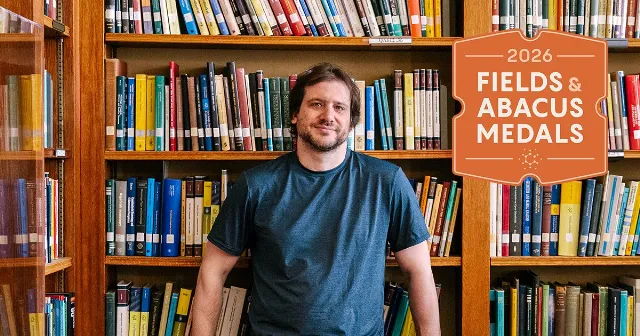
Jacob Tsimerman, a mathematician at the University of Toronto, has been awarded the 2026 Fields Medal for his proof of the André-Oort conjecture, a deep problem linking number theory and algebraic geometry. The honor, often described as the Nobel Prize of mathematics, recognizes his decade-long effort that culminated in a complete solution in 2021.
Tsimerman's journey to the top of the mathematical world has been anything but linear. During his graduate studies, he took an improv class with the Upright Citizens Brigade in New York, an experience that captivated him and became a lasting passion. 'You make a choice, see what happens, react in the moment,' he said. He continued improv in Cambridge, Massachusetts, during his postdoctoral work at Harvard, and later in Toronto. He even wrote a musical, The Sombrero Detective, a neo-noir story about a town with a severe water shortage.
For Tsimerman, improv and math are complementary opposites. 'Improv is very much about losing control,' he explained. 'The way I think about math is, it’s really the opposite. I’m constantly trying to gain as much control as I can.' This balance of spontaneity and precision has fueled his creative approach to mathematics.
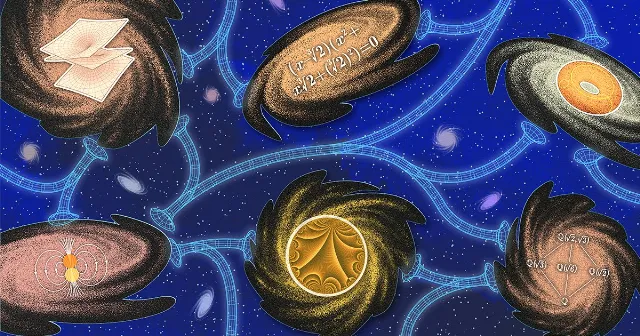
The André-Oort conjecture, first formulated in the 1990s, concerns the intersection of algebraic geometry and number theory. It predicts that certain special points in moduli spaces—geometric objects that parameterize algebraic varieties—must lie on algebraic subvarieties. Tsimerman began working on the problem as a graduate student, eventually collaborating with Jonathan Pila and others to chip away at its pieces. In 2021, together with Pila and Arul Shankar, he posted a complete proof, bringing closure to a problem that had stumped mathematicians for decades.
Along the way, Tsimerman also made significant contributions to Hodge theory, an area that studies geometric spaces by translating them into analytic objects. In the 1970s, mathematician Philip Griffiths had conjectured that even in the analytic world, some underlying geometric structure should persist. Tsimerman, with Benjamin Bakker and Yohan Brunebarbe, proved Griffiths' conjecture in 2018 and developed a framework called o-minimal GAGA, which provides a new way to show that some analytic spaces have hidden algebraic structure. This work demonstrated his ability not only to solve problems but also to build new mathematical machinery.
As his reputation grew, Tsimerman shifted his focus. 'I worked hard and sacrificed enjoyment to try and win it,' he said, referring to the Fields Medal. He stopped pursuing fun side projects and concentrated on deep, impactful research. 'I stopped doing fun side projects and buckled down on projects that were high-return,' he noted. The strategy paid off: he won the 2022 New Horizons in Mathematics award and the 2023 Ostrowski Prize before securing the Fields Medal in 2026.
Despite his success, Tsimerman worries about the future of mathematics. He sees the field as increasingly competitive and pressured, potentially stifling the kind of creative exploration that led to his own breakthroughs. His journey—from improv stages to proving major conjectures—serves as a reminder that mathematical progress often thrives on a mix of discipline and spontaneity.
For more on the interplay of creativity and rigor in mathematics, see our article on Sloppy Shuffles Need More Mixes: New Math Pinpoints the Magic Number, and for a perspective on the limits of mathematical systems, read about Gödel's Incompleteness Theorems.