In 1989, Martin Fleischmann and Stanley Pons claimed to have achieved nuclear fusion at room temperature, sparking a media frenzy and a scientific controversy that ended in accusations of fraud and a tarnished reputation for the field. For decades, “cold fusion” has been a byword for scientific misconduct and wishful thinking. But dig beneath the surface, and you’ll find a small but persistent community of researchers exploring phenomena that, while unlikely to solve the world’s energy crisis, probe the boundaries of nuclear and atomic physics.
The stigma that persists
The initial announcement was met with widespread skepticism, and subsequent attempts to replicate the results failed. The scientific consensus quickly solidified: the original claims were likely due to experimental errors, and the field was relegated to the fringes. However, a handful of labs continued to investigate, often under the less loaded term “low-energy nuclear reactions” (LENR). These researchers are not chasing a miracle energy source; instead, they are asking fundamental questions about nuclear processes that occur under unexpected conditions.
Exotic atoms and anomalous effects
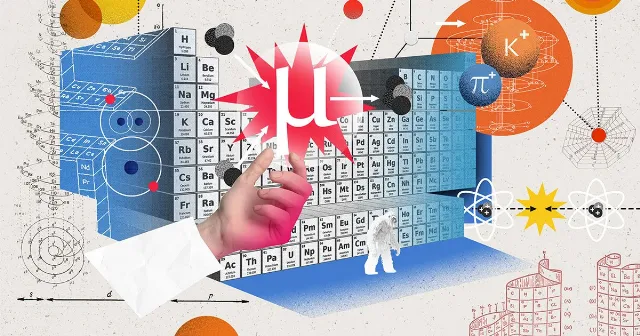
One line of inquiry involves muon-catalyzed fusion, where a muon—a heavier cousin of the electron—replaces an electron in a hydrogen molecule, pulling the nuclei so close that fusion can occur at lower temperatures. While this is a well-understood phenomenon, it’s not practical for energy production because muons are short-lived. Yet it demonstrates that “cold” fusion is not impossible in principle; it just requires exotic particles.
Another strand of research examines anomalous heat production in metal lattices loaded with deuterium. Some experiments have reported excess heat that cannot be explained by known chemical reactions, but these results are often irreproducible and met with skepticism. Proponents argue that the effect might be due to a yet-unknown nuclear interaction, while critics point to measurement errors and contamination.
Connections to broader physics
Despite the controversy, the field has quietly influenced other areas. For instance, the study of dark matter's ghostly trio and other cosmic anomalies often involves similar detector technologies and data analysis techniques. Moreover, the debate over cold fusion has parallels with the recent AI-driven proof of a quasi-Riemann hypothesis, where the scientific community must balance excitement with rigorous scrutiny.
The role of theory
Theorists have proposed various models to explain the observed anomalies, from electron screening effects to the formation of exotic atoms like muonic or pionic hydrogen. These ideas, while speculative, push the boundaries of our understanding of nuclear interactions. Some researchers suggest that the phenomena might be related to the holographic principle, which posits that the universe is a projection of lower-dimensional information. Though far-fetched, such connections highlight how fringe research can inspire novel theoretical frameworks.
A cautionary tale for science
The cold fusion saga serves as a cautionary tale about the dangers of pathological science—a term coined by physicist Irving Langmuir to describe research that appears scientific but is tainted by subjective effects and unreproducible results. It underscores the importance of replication and peer review, but also the risk of dismissing unconventional ideas too quickly. As physicist Frank Close wrote, “The cold fusion episode is a classic example of how science can go wrong, but also how it can self-correct.”
The future of cold fusion research
Today, a small but dedicated community continues to publish in niche journals and attend specialized conferences. They are not claiming to have unlocked a cheap energy source; rather, they are exploring the boundaries of nuclear physics with tools and techniques that have improved dramatically since 1989. Whether any of this will lead to a paradigm shift remains uncertain, but the pursuit itself is a testament to human curiosity. As one researcher put it, “We are not looking for a miracle; we are looking for a clue.”
For now, cold fusion remains a fascinating chapter in the history of science—a reminder that even the most discredited ideas can leave a lasting imprint on the scientific imagination.