For decades, the question of how life began has been a battleground of competing theories, each with its own champion molecule. The classic approach, as chemist Matthew Powner of University College London puts it, was to "pick one of life's molecules and assume that was the progenitor," temporarily ignoring all others. The most famous of these is the RNA world, a scenario in which self-replicating RNA molecules served as both genetic material and catalysts, kick-starting biology without the need for proteins or DNA.
The RNA world gained prominence after the 1980s discovery that some RNA molecules can act as enzymes, catalyzing biochemical reactions. This finding, which earned Thomas Cech and Sidney Altman a Nobel Prize, suggested that RNA could store genetic information and speed up its own replication, solving a chicken-and-egg problem: how did early life manage without the complex enzymes it uses today? RNA, in theory, could do it all.
Yet the RNA world was never the only contender. In the 1970s, the discovery of hydrothermal vents in the Pacific Ocean—and the bizarre ecosystems thriving around them—sparked new ideas. In 1988, German patent lawyer and chemist Günter Wächtershäuser proposed an "iron-sulfur world," where iron-sulfide minerals near these vents could have driven primitive metabolic reactions. Around the same time, complexity theorist Stuart Kauffman, now emeritus at the University of Pennsylvania, championed "autocatalytic sets," networks of molecules where each catalyzes the next in a self-sustaining cycle. These ideas gave rise to the metabolism-first hypothesis, which posits that life emerged as self-reinforcing chemical networks, with genetic information arriving later.
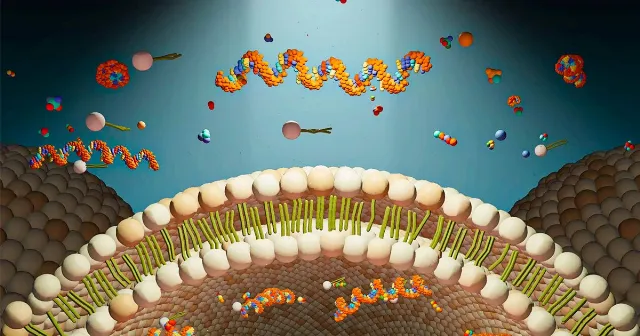
The metabolism-first view contrasts sharply with the RNA world, but it wasn't the only alternative. Researchers also floated a lipid world, where membrane-forming molecules came first, creating compartments that housed early chemistry. Others proposed a protein world, a virus world, a coenzyme world, a zinc world, and even a clay world. As Powner notes, "You can find any world you ever imagined predicated on whatever your background was when you joined this field."
Location was another point of contention. Did life begin in Darwin's "warm little ponds," or in the ocean depths, or in polar ice? Some theories tied life's origins to specific environments, while others allowed for multiple starting points. Each camp had its loyalists, and the debates often grew heated.
Now, a new generation of scientists is stepping back from these entrenched positions. Instead of asking which molecule came first, they're asking how chemistry as a whole could transition into biology. This shift reflects a more integrative approach, recognizing that life's origins may have involved a combination of processes—perhaps RNA, metabolism, and lipid compartments all played roles in a messy, gradual emergence.
This evolving perspective is part of a broader trend in science, where interdisciplinary thinking is replacing single-cause explanations. For instance, recent research on ancient viral DNA has shown how once-parasitic genetic elements became essential to our biology, illustrating the complexity of evolutionary origins. Similarly, the study of life's beginnings now embraces complexity rather than simplicity.
As scientists continue to probe the origins of life, they're also redefining what life itself is. The question is no longer just about the past, but about the potential forms life could take elsewhere in the universe. This broader perspective may eventually lead to a unified theory of biogenesis, one that acknowledges the interplay of many molecular players.
For now, the field remains vibrant and contentious, but the new generation is less interested in picking a single winner and more interested in understanding the full, messy story of how chemistry became biology.