In 1989, the world was gripped by the announcement of cold fusion—a tabletop experiment that supposedly produced excess energy through nuclear fusion at room temperature. The promise of limitless, clean power captivated politicians and the public alike. But within months, replication attempts failed, and the initial claims were discredited, tarnishing the field for decades. Yet beneath the surface of this scientific scandal lies a quieter, more intriguing story: a niche research program that, while not delivering on the grand energy dream, has pushed the boundaries of physics in unexpected ways.
For many, the cold fusion episode is a cautionary tale of scientific misconduct and hype. The original experiment, conducted by Martin Fleischmann and Stanley Pons, was plagued by errors, a manipulated graph, and legal threats against skeptics. Corroborating studies were later retracted, some amid allegations of deliberate contamination. The scientific community's swift and harsh response was warranted, but it also cast a long shadow over legitimate research areas that happened to share the same label.
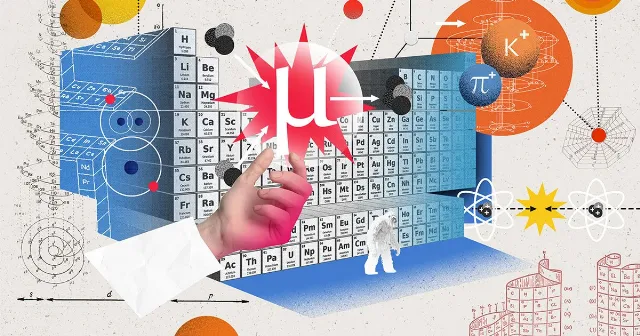
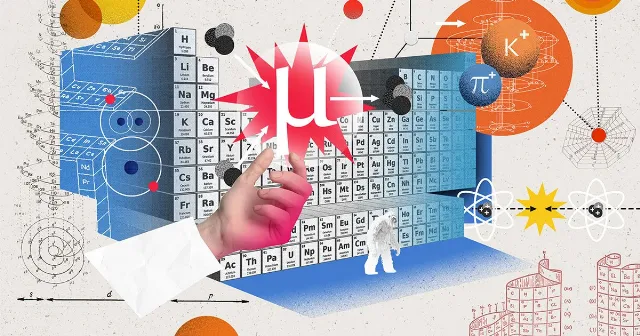
One such area is muon-catalyzed fusion, a phenomenon that predates the 1989 controversy and operates on entirely different principles. Instead of relying on extreme temperatures and pressures, muons—heavier cousins of electrons—can replace electrons in hydrogen molecules, bringing nuclei close enough to fuse via quantum tunneling. This process, first theorized in the 1940s and experimentally demonstrated in the 1950s, is a genuine form of fusion that occurs at relatively low energies. It's not a practical energy source—each muon produces only a few fusions before decaying—but it offers a unique window into quantum mechanics and nuclear interactions.
In a recent exploration of this topic, philosopher Huw Price, co-founder of the Center for the Study of Existential Risk, highlighted the importance of not dismissing such phenomena outright. Price argues that while cold fusion as originally claimed is almost certainly impossible, the underlying scientific questions deserve attention. The 1989 debacle, he suggests, created an anchoring effect that unfairly tainted related fields, such as the study of hydrogen absorption in palladium—a material that can soak up hydrogen like a sponge, a property that remains fascinating for materials science.
This viewpoint is echoed by Matt Trevithick, a venture capitalist who, while at Google, organized a project to revisit cold fusion. The project, which culminated in a 2019 Nature paper, found no evidence of anomalous nuclear reactions but did produce 28 academic papers on hydrogenated metals and other phenomena. Trevithick's goal was to destigmatize the field, allowing researchers to explore these materials without the shadow of the 1989 fraud. As he put it, "We destigmatized a field."
The scientific value of this research extends beyond energy. For instance, the study of hydrogenated metals has implications for hydrogen storage, catalysis, and even our understanding of planetary interiors. Muon-catalyzed fusion, though not a power source, provides a testbed for quantum theories and could inform future fusion research. These are not the world-changing applications once promised, but they are real and tangible contributions to science.
Moreover, the cold fusion saga offers a cautionary tale about the allure of revolutionary claims and the importance of rigorous replication. It also raises philosophical questions about how we evaluate fringe ideas—should we invest in improbable but high-impact possibilities, as Price suggests, or is that a slippery slope toward pseudoscience? The answer lies in the scientific method: open-mindedness tempered by evidence.
As we look to the future of fusion energy, the lessons from cold fusion are relevant. Mainstream fusion projects, like ITER, are massive, costly, and slow, but they are built on solid physics. In contrast, the cold fusion dream was a mirage. Yet the detour it created has led to a rich scientific backwater that, while not solving our energy crisis, enriches our understanding of the atomic world.
For those interested in the broader implications of such scientific controversies, consider how other fields handle anomalous claims. For example, biological agency challenges our view of life, and AI's quasi-Riemann hypothesis proof raises questions about the nature of mathematical truth. These stories remind us that science is a human endeavor, full of false starts and unexpected turns.
In the end, the legacy of cold fusion is twofold: a reminder of the dangers of hype, and a testament to the resilience of scientific inquiry. Even in the shadow of a fraud, researchers have found ways to turn a discredited idea into a productive field of study. The dream of limitless energy may be dead, but the curiosity it sparked lives on.