In philosophy, "qualia" capture the subjective essence of experience—what it feels like to see blue or to feel joy. These are the "ways things seem to us," as philosopher Daniel Dennett described. But when we turn to biology, we encounter a similarly elusive notion: agency, the idea that living beings actively pursue their own goals.
Describing life as a nonequilibrium organized state with a constant flow of matter and energy is accurate but incomplete. Hurricanes fit that description, yet they simply are. Living organisms, on the other hand, have aims: finding food, reproducing, surviving, and sometimes just seeking pleasure. This goal-directed behavior, or teleology, has long puzzled biologists and philosophers.
Agency is a contentious term. Some biologists reject it for non-human organisms, arguing that only humans act with conscious deliberation. Others see agency as a fundamental property of all life. Since there's no universal definition, the term can be ambiguous, but the debate touches on core questions about life's essence. Does admitting agency open the door to ideas of design or vitalism? Or does it merely acknowledge what makes life special?
To me, agency captures the intuitive sense that living things are not just machines pushed by environment. Yet, aversion to the term may stem from discomfort with viewing life as more than a genetic program. However, agency also risks derailing mechanistic explanations of life. The goal is not to praise or bury agency but to explore its scientific utility.
Biologists like Ernst Mayr and Jacques Monod have acknowledged that organisms appear goal-directed. Whether it's a bird building a nest or a white blood cell chasing bacteria, we assume they're trying to accomplish something. The agency debate is about what this means. One view holds that apparent goal-directedness results from genetic instructions—organisms are automata directed by genes, with natural selection favoring certain behaviors. But is that all?
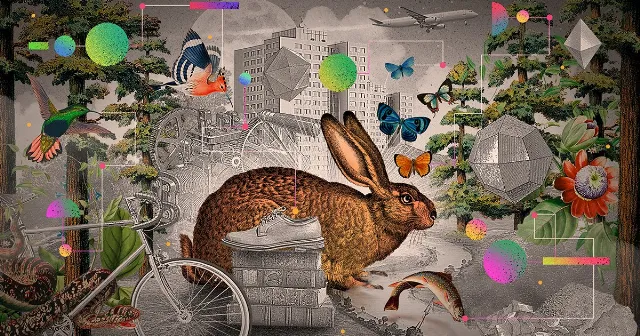
Consider a hare fleeing a fox. Genes help build neural networks enabling behaviors that avoid predation, but are genes responsible for the decision to dart left or right, hide or run? Genetics might bias behavior, but organisms integrate contextual and learned information on the fly. Agency, in this view, is the ability to set proximal goals—"What action now?"—and act to achieve them.
Neuroscientist Kevin Mitchell of Trinity College Dublin, author of Free Agents: How Evolution Gave Us Free Will, defines agency as "the capacity of an entity to act in the world, for reasons of its own." He argues that all living organisms are causal entities, not mere vehicles steered by genes. We wouldn't say your atoms made your coffee this morning; it was you, a decision-making agent.
The question remains: can agency be a scientifically productive concept? It may help explain behaviors that aren't easily pinned to specific genes, like the flexible decision-making seen in animals. For instance, research on memory transfer in worms suggests that learned experiences can influence behavior beyond genetic programming. Similarly, studies on ecotypes show how hyperlocal adaptations involve nuanced responses to environment.
Ultimately, agency challenges the gene-centric view of life. It invites us to see organisms as active participants in their own existence, not just passive executors of genetic commands. Whether this idea enriches or complicates biology, it forces us to confront what it truly means to be alive.