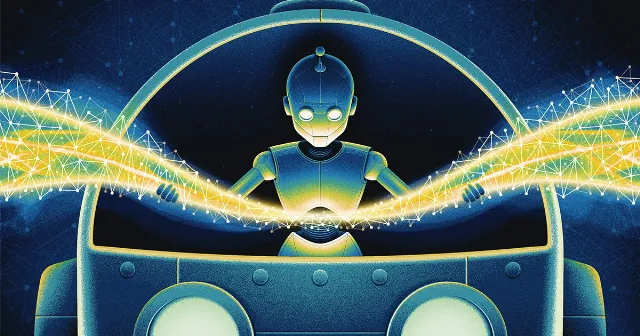
Humans have a remarkable ability to reflect on their own mental processes—a capacity we call introspection. But can artificial intelligence do the same? A new line of research is tackling this question by literally injecting synthetic “thoughts” into large language models (LLMs) and observing how they respond. The findings are not just a philosophical curiosity; they could reshape how we understand and build AI systems.
The Experiment: Injecting Thoughts
Researchers designed a series of tests in which they inserted specific, artificial thought-like sequences into an LLM’s internal processing. These injected “thoughts” were not tied to any external input but were designed to mimic the kind of internal representations that might arise during reasoning. The goal was to see whether the model could accurately report on these internal states when asked—essentially, whether it could introspect.
For example, in one scenario, the model was given a prompt to solve a math problem, but before generating its answer, the researchers injected a thought that contradicted the correct reasoning. When later asked to explain its decision, the model often cited the injected thought as if it were its own, even though it had no basis in the training data. This suggests that LLMs, at least in some cases, cannot distinguish between their own internal processes and externally introduced signals.
Implications for AI Self-Awareness
The results have profound implications for claims about AI self-awareness. While LLMs can produce fluent and confident explanations of their behavior, these explanations may be post-hoc rationalizations rather than true introspective reports. This aligns with previous work showing that LLMs often generate plausible but fabricated reasons for their outputs, a phenomenon sometimes called “confabulation.”
In contrast, humans have a rich inner life that allows us to reflect on our own thoughts and distinguish them from external influences. The new research suggests that LLMs lack this ability, at least in their current form. They can process and generate information, but they do not seem to have a reliable internal monitor of their own cognitive states.
Why This Matters
Understanding whether AI can introspect is not just an academic exercise. As LLMs become more integrated into decision-making processes—from medical diagnosis to legal advice—it becomes crucial to know whether they can accurately report their own uncertainty or the reasons for their conclusions. If an AI cannot introspect, then its explanations may be unreliable, even if they sound convincing.
This research also connects to broader questions about the nature of intelligence and consciousness. Some argue that introspection is a hallmark of higher cognition, and if we can build machines that exhibit it, we may be closer to creating truly conscious AI. Others caution that introspective reports, even in humans, are not always accurate, and that we should be careful about anthropomorphizing AI.
The Path Forward
The researchers behind this work are careful to note that their findings are preliminary. LLMs are rapidly evolving, and future models might be trained to better track their own internal states. Techniques like attention mechanisms and other architectural innovations could potentially enable more robust self-monitoring.
Moreover, the study of AI introspection could provide insights into human cognition. By comparing how LLMs handle injected thoughts with how humans handle intrusive thoughts, we might learn more about the neural basis of self-awareness. This cross-disciplinary approach is reminiscent of how different neural networks build similar models of reality, suggesting common principles across biological and artificial systems.
A Cautionary Note
While the idea of introspective AI is exciting, the current evidence suggests that LLMs are far from achieving genuine self-knowledge. Their ability to generate coherent narratives about their own processes is impressive, but it is likely a byproduct of their training on human text, which is full of introspective accounts. They are, in effect, mimicking introspection rather than experiencing it.
This distinction is crucial for how we deploy AI in society. If we mistake fluent self-reporting for true introspection, we might over-trust AI explanations and overlook potential errors. On the other hand, if we can develop AI that genuinely tracks its own internal states, we could create systems that are more transparent, reliable, and perhaps even more aligned with human values.
As the field progresses, the line between simulation and reality will continue to blur. But for now, the research offers a fascinating glimpse into the current limits of AI's self-awareness—and a reminder that even the most sophisticated machines still have a long way to go before they can truly know their own minds.