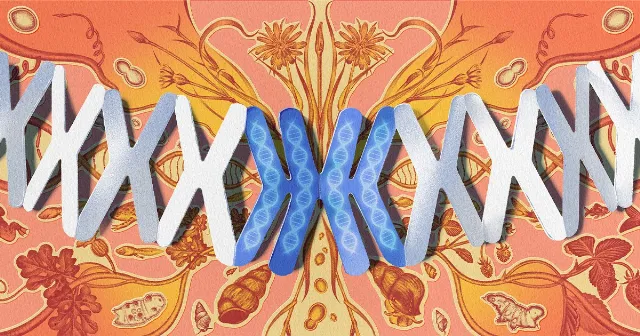
Imagine copying every page of an organism's genetic instruction manual, then handing the doubled set to its descendants. That's the essence of whole-genome duplication, or polyploidy—a radical evolutionary gamble that can either unlock dazzling new forms or lead to a dead end. From the oversized strawberries in your grocery store to the diverse vegetables of the brassica family, this high-stakes process has shaped life on Earth in profound ways.
Polyploidy occurs when an organism inherits extra sets of chromosomes, often from a mishap during cell division or hybridization between species. The result can be immediate: octoploid strawberries, with eight copies of each chromosome, produce those plump, juicy fruits we love, while triploid watermelons are sterile and therefore seedless. But such dramatic genomic upheaval comes with risks. The sudden doubling of genetic material can disrupt delicate cellular machinery, and many polyploid offspring are inviable or sterile.
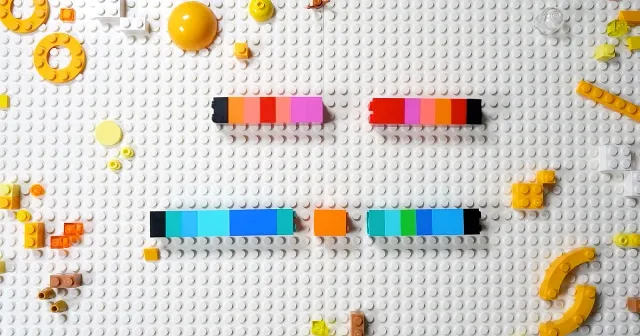
For decades, scientists debated whether polyploidy was an evolutionary dead end or a creative force. The late geneticist Susumu Ohno argued in his 1970 book that gene duplication—whether of single genes or entire genomes—could provide raw material for innovation. With spare copies, evolution could tinker with one version while preserving the original function in the other. Yet his hypothesis about ancient genome duplications in vertebrates was initially met with skepticism.
It wasn't until the late 1990s that genomic data began to reveal the hidden history of duplication. Kenneth Wolfe, a bioinformatician at University College Dublin, noticed an odd pattern in the yeast genome: many duplicated segments with about 60% similarity, separated by stretches of unique DNA. "You could really see the history of what had happened," he recalled. "You could track every gene and see what happened to it." His 1997 paper in Nature provided compelling evidence that yeast had undergone a whole-genome duplication, followed by a gradual process of rediploidization, where extra genes are pruned or repurposed.
Wolfe's methods soon uncovered similar signatures in other organisms. The model plant Arabidopsis showed unmistakable signs of ancient duplication, as did the genomes of vertebrates, including humans. "There was a genome duplication in there screaming at us," he said. The pattern was clear: polyploidy was not a rare curiosity but a recurring theme in evolution.
Yet the immediate aftermath of duplication is often chaotic. Pamela and Douglas Soltis, evolutionary biologists at the University of Florida, have studied goatsbeard plants that underwent polyploidy in the 1920s after being introduced to North America. By growing these plants from seed, they observed that within a single generation, the extra genes were already being silenced or lost. "Immediately, in one generation, they're already beginning to get rid of certain copies of genes," Douglas Soltis said. This rapid pruning suggests that organisms must quickly stabilize their doubled genomes or face extinction.
The benefits of polyploidy, when it succeeds, can be spectacular. The brassica genus—including broccoli, kale, and cauliflower—owes its diversity to an ancient genome duplication, as does the tomato's evolution of colorful, fleshy fruit. These examples highlight how polyploidy can drive rapid adaptation and speciation, providing genetic fodder for new functions while the original copies maintain essential roles.
Still, the odds are steep. Most polyploid events end in failure, and even successful ones leave lasting scars on the genome. Evolutionary biologist Sarah Otto of the University of British Columbia notes that genomes are far more plastic than once imagined: "You might think that the genome, the blueprint of life, would be a stable thing. It's not. It's all over the map."
Understanding how organisms survive this genetic upheaval is not just a curiosity—it has practical implications for agriculture and medicine. By unraveling the rules of polyploidy, researchers hope to harness its power for crop improvement or to understand diseases linked to genomic instability. As Wolfe's work shows, the history of life is written in duplicated and discarded genes, and every organism carries the legacy of these ancient gambles.