In philosophy, "qualia" captures the subjective essence of experience—what it feels like to see blue or to taste a ripe strawberry. These essays explore such profound questions, often without definitive answers. Today, a new question looms: Is artificial intelligence the end of mathematics as we know it?
Two days after a major AI announcement, I attended a talk at the University of California, Berkeley, where mathematician Ken Ono—now at the AI startup Axiom Math—addressed a packed room of 150 students, postdocs, and professors. His message was stark: "You might be graduating into a profession that might not even exist, or that will be very different than what you expected. You need to brace."
The audience's reaction was visceral. Whispers and hostile glances punctuated his slides. One student asked how Ono's company would take responsibility for "the shameful way that AI companies are treating mathematics." Another, hands trembling, demanded to know what his "very best" meant. The talk stretched from 50 minutes to over two hours, with many lingering afterward to vent and console each other.
These emotions are understandable: young mathematicians see their field facing a fork in the road—adapt or risk extinction. But when I returned to New York and raised the topic with friends and family, they were puzzled. Wasn't AI just another tool, leading to amazing discoveries? Their confusion exposed a deeper issue: most people don't truly understand what mathematics is, or why mathematicians pursue it.
As an undergraduate, I saw pure mathematics as straddling the sciences and the arts. It prizes logic and certainty, yet at its core lie fuzzy notions of beauty, intuition, and depth. "Math is either the most science-y humanities or the most humanities-type science, depending who you ask," said Marcel Goh, a doctoral student at McGill University. Its abstractions often prove "unreasonably effective" in physics and beyond, yet its value is rarely tied to immediate utility.
In mathematics, the journey matters more than the destination. Problems are posed not because their answers are practical, but because they offer interesting journeys—struggles that yield new tools, connections, and unexpected questions. "It was never about the theorems," Goh said. "It's to carry on a tradition that has benefited society despite not having any market value. To reason deeply, to understand the world… and to spread that knowledge."
AI threatens this tradition by automating the very processes mathematicians cherish. As computers take on more creative roles, the human element of discovery—the intuition, the aesthetic judgment—may become obsolete. Some even argue that AI "breaks our system. It just takes it to its absolute limit and destroys it."
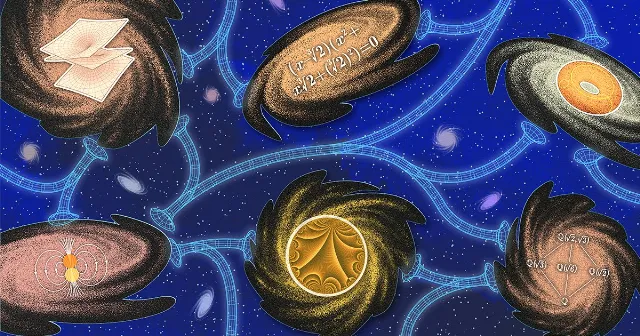
Yet, this crisis could also be an opportunity. Mathematicians might redefine their field, focusing on problems that require human creativity and insight, much like the Langlands program has revealed hidden bridges across mathematics. Or they might embrace AI as a collaborator, as seen in recent proofs that blend human and machine reasoning. The future may hold a new kind of mathematics, one that leverages AI's power while preserving the human spirit of inquiry.
How mathematicians answer this question will determine what happens next. They must explain to the world—and to themselves—what mathematics truly is, and why it matters. If they succeed, mathematics may not just survive but evolve into something even more profound. If they fail, the field could fade into history. The clock is ticking.