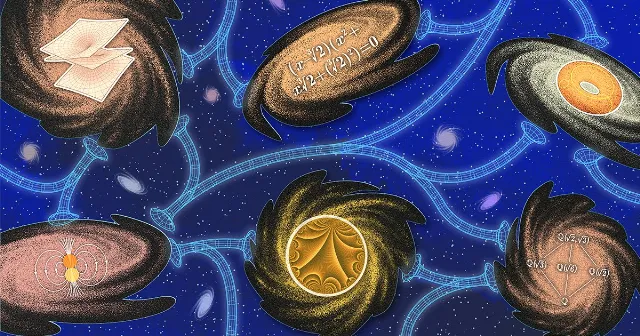
In the world of mathematics, few ideas are as vast and enigmatic as the Langlands program. Named after Canadian mathematician Robert Langlands, it is a sprawling web of conjectures that connects seemingly unrelated branches of the discipline. But what exactly is it? Ask ten experts and you might get ten different answers: "unexpected symmetries," "bridges between two areas of mathematics," or even "the best vision we have to understand non-abelian versions of Fourier theory." The program is so multifaceted that even its practitioners often resort to the parable of the blind men and the elephant.
At its heart, the Langlands program is about correspondences—hidden links between objects in number theory (the study of integers and rational numbers) and objects in harmonic analysis (the study of waves and signals). These links suggest a deeper, unifying structure beneath the surface of mathematics, one that might also resonate with the physical world. But to grasp this, we need to start where Langlands started: with a deceptively simple set of numbers called $latex \mathbb{Q}$, the rational numbers.
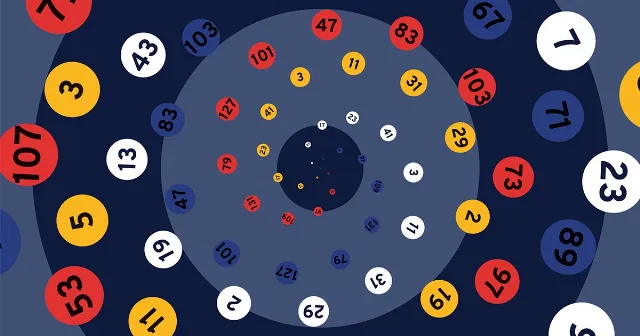
Rational numbers are those that can be expressed as fractions, like 1, $latex \frac{5}{16}$, or $latex -5.3277$. They form what mathematicians call a number field, because they are closed under addition, subtraction, multiplication, and division (except by zero). This field is the starting point for a rich theory of prime numbers and their distribution. But Langlands noticed something remarkable: the behavior of primes in this field might be mirrored in the behavior of certain functions on a completely different mathematical object—the symmetries of a sphere or a more complex shape.
To see the connection, consider Fourier analysis, which decomposes a complex wave into simpler sine and cosine waves. In number theory, there is an analogous idea: every function on the rationals can be built from "basic" pieces called automorphic forms. These forms have a symmetry property that is not abelian (commutative), unlike the simple addition of waves. Langlands conjectured that every automorphic form corresponds to a specific object in a different realm: a representation of the Galois group, which encodes the symmetries of number fields. This is the "non-abelian Fourier theory" that some mathematicians refer to—a way to translate between two languages that seem utterly different.
Since Langlands penned his famous 1967 letter to fellow mathematician André Weil, the program has expanded far beyond its original scope. It now touches on algebraic geometry, representation theory, and even physics. For example, in the 1990s, the mathematician Vladimir Drinfeld and others found connections between the Langlands program and the quantum Hall effect, a phenomenon in condensed matter physics. More recently, the program has been linked to the geometric Langlands correspondence, which deals with curves and vector bundles, and has inspired work in string theory.
Why does this matter? Because if the Langlands correspondences hold, they would reveal a profound unity in mathematics. They would show that the distribution of prime numbers, the symmetries of geometric shapes, and the behavior of certain functions are all facets of the same underlying structure. This is not just an academic exercise; it could lead to new tools for cryptography, where prime numbers play a central role, or new insights into quantum physics, where symmetries are fundamental.
Yet the program remains largely unproven. Only a few cases have been verified, such as the Langlands correspondence for $latex GL_2$ over the rationals, proved by Laurent Lafforgue in 2002, and the local Langlands correspondence for $latex GL_n$ over $latex p$-adic fields, proved by Michael Harris and Richard Taylor in 2001. These breakthroughs are celebrated, but they are just islands in a vast ocean of conjecture.
Mathematicians are cautious about interpreting the program's deeper meaning. "We don't yet know what the elephant looks like," one joked, referencing the blind men parable. But the search for meaning is part of the allure. Some see the Langlands program as evidence that mathematics is not invented but discovered, and that the universe's order is mirrored in the abstract structures of numbers and symmetries. Others view it as a practical tool, a way to organize knowledge and solve problems that would otherwise be intractable.
As with many great scientific ideas, the Langlands program may be more than the sum of its parts. It is a living, evolving vision that challenges our understanding of what mathematics is and what it can do. For now, it remains a mystery—but one that mathematicians are determined to unravel, one correspondence at a time.