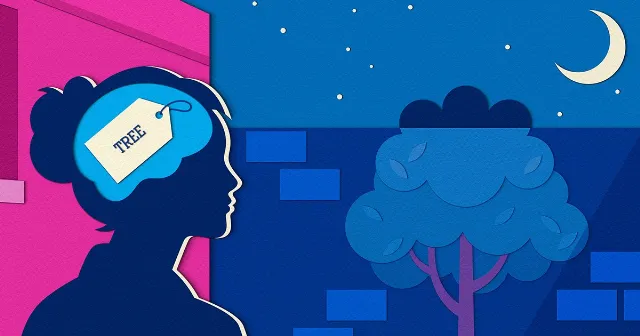
For decades, neuroscientists have described the brain's ability to group similar experiences as a kind of mental filing system. When you encounter a new situation, your brain quickly sorts it into an existing category—like 'dangerous' or 'rewarding'—based on past encounters. But a growing body of research suggests this metaphor is outdated. Instead of a passive storage room, the brain appears to be an active prediction engine, constantly forecasting what comes next. A new framework, discussed on the Quanta Podcast, captures this shift, offering a modern view of categorization that aligns with the dynamic, predictive nature of neural processing.
The traditional view treated categorization as a bottom-up process: sensory information flows in, gets compared to stored templates, and a label is applied. This 'filing cabinet' model works for simple cases, but it fails to explain how the brain handles ambiguity, novelty, and the sheer noise of the real world. For instance, when you see a blurred shape in fog, your brain doesn't just match it to a stored image—it actively guesses what it might be, using context and prior knowledge. This predictive element is central to the new framework.
According to the updated perspective, categorization is not just about recognizing patterns but about generating predictions. The brain uses past experiences not as fixed templates but as flexible models that can be tweaked to anticipate the future. This aligns with the broader 'predictive processing' paradigm in neuroscience, which posits that the brain constantly generates predictions about sensory input and updates them based on prediction errors. In this view, categories are not static files but dynamic hypotheses.
One key implication is that categorization is inherently noisy and probabilistic. The brain doesn't assign a single category; it maintains a distribution of possibilities, weighing the likelihood of each. This probabilistic approach allows the brain to handle uncertainty gracefully, making quick decisions even with incomplete information. For example, when you hear a rustle in the bushes, your brain might assign a high probability to 'animal' but also consider 'wind' or 'another person,' and adjust your behavior accordingly.
The framework also emphasizes the role of context. Categories are not isolated; they are embedded in rich networks of associations. A 'chair' is not just a chair—it's linked to 'sitting,' 'table,' 'wood,' and so on. This contextual embedding allows the brain to flexibly switch between categories depending on the situation, a feature that a rigid filing system cannot replicate. It also explains why categorization can be biased by prior expectations, as seen in studies where people perceive ambiguous stimuli according to their beliefs.
This predictive view has practical implications for understanding disorders like anxiety and PTSD, where categorization can become maladaptive. If the brain over-weights certain categories—like 'threat'—it may produce excessive fear responses. By reframing categorization as a predictive process, researchers hope to develop new therapeutic approaches that target predictive mechanisms rather than just behavioral responses.
The new framework also connects to advances in artificial intelligence, where predictive models are revolutionizing machine learning. Just as neural networks learn to predict outcomes, the brain may use similar principles to organize knowledge. This cross-pollination between neuroscience and AI is exciting, as it suggests that understanding the brain's predictive categorization could inform more robust AI systems. For more on how mathematics is finding unexpected applications in such areas, see how abstract mathematics is finding unexpected real-world applications.
While the framework is still evolving, it represents a significant conceptual shift. It moves the field away from static representations toward a more fluid, dynamic understanding of cognition. This is part of a broader trend in neuroscience, where the brain is increasingly seen as a prediction machine rather than a passive recorder. For a deeper dive into how quantum concepts like decoherence are reshaping our view of physical reality, the parallels are striking—both fields are moving from deterministic, static models to probabilistic, dynamic ones.
Ultimately, this new framework for categorization underscores a fundamental truth: the brain is not a filing cabinet but a storyteller, constantly weaving predictions from the threads of experience. As research progresses, it may reveal even more about how we make sense of a noisy, ever-changing world.