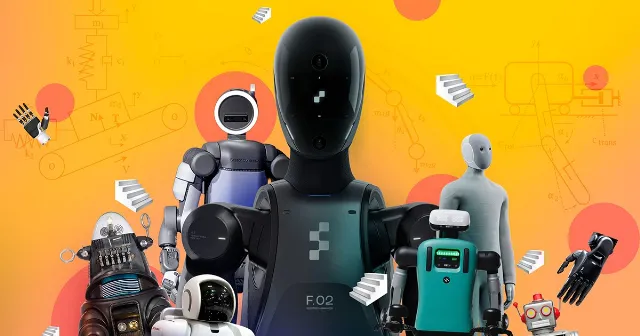
Humanoid robots have evolved from clunky, hydraulic-powered machines into sleek, electric marvels capable of impressive feats. Videos of robots performing backflips or dancing have become commonplace, creating an illusion of near-perfect capability. Yet, ask the engineers building them if their flagship models can reliably climb any set of stairs or open any door, and the answer is a sobering 'no.' This persistent gap between spectacular demos and robust, everyday functionality reveals that the path to truly useful humanoids requires solving some surprisingly fundamental problems.
Three Revolutions That Transformed Robotics
The last ten years have witnessed not one, but three seismic shifts in robotics technology. First, deep learning, powered by specialized computer chips, gave robots vastly improved vision and the ability to learn complex movements through trial and error. Second, a revolution in actuation replaced heavy, hydraulic systems with lighter, more responsive electric motors. These 'proprioceptive' actuators allow robots to sense and adjust their own movements with an animal-like grace. Finally, the rise of large language models has been adapted to help robots plan and execute multi-step tasks, from sorting objects to simple kitchen chores.

These advances created a night-and-day difference. Compare the slow, staggering robots from a decade ago to today's agile models that can navigate cluttered spaces and even recover from being pushed. The hardware and software foundations are now incredibly sophisticated.
The Stubborn Problem of the 'Small Stuff'
So why does a simple doorknob or an unfamiliar staircase still pose such a problem? The issue isn't a lack of power or processing, but a gap in integrated, real-world intelligence. Each stair, door, or household object presents a unique combination of variables—friction, weight, texture, and geometry—that a robot must perceive, interpret, and physically negotiate in real time. A demo in a controlled lab is one thing; reliably handling the infinite variations of the human world is another.
As one expert put it, the challenge isn't just about making a robot that doesn't fall over. It's about creating a system that can understand the physical world with the same intuitive ease as a human. This requires a seamless fusion of high-level task planning, minute-by-minute movement adjustment, and instant tactile feedback—a combination that remains extraordinarily difficult to engineer. The principles governing how forces interact in such complex systems share conceptual ground with the physics of how materials crack and bear stress in the natural world.
Beyond the Demo: The Path to Reliability
Researchers emphasize that the next leap won't come from a single new algorithm or actuator. Instead, it requires building systems that are fundamentally more robust and adaptable. Robots need to build rich internal models of their surroundings and their own physicality, allowing them to predict the consequences of their actions before they make a move. They must handle uncertainty and novel situations not by freezing, but by cautiously exploring and adapting.
This involves challenges that span disciplines, from the advanced mathematics of control theory to the biological principles of sensorimotor integration. Progress may even draw inspiration from abstract mathematical frameworks that describe complex, adaptive systems. The goal is a robot that doesn't just perform a pre-programmed sequence for a specific stair, but one that understands the general concept of 'stairs' and can apply that understanding to any configuration it encounters.
The journey of humanoid robotics is a reminder that replicating the effortless, unconscious competence of biological movement is one of technology's grand challenges. While robots can now perform breathtaking acrobatics, the true test of their arrival in our daily lives will be far more mundane: watching one consistently and safely bring a cup of coffee up a flight of stairs without a second thought.