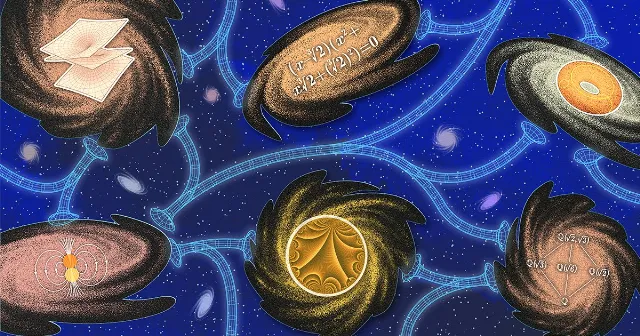
For centuries, infinity has been a cornerstone of mathematics, woven into the fabric of calculus, set theory, and number systems. Yet a small but growing group of researchers is calling for its complete banishment. This philosophy, known as ultrafinitism, argues that only finite objects and processes that can be physically realized should be considered mathematically valid. While often dismissed as a fringe heresy, ultrafinitism is now inspiring fresh insights—not just in mathematics, but in fields as diverse as computer science and physics.
The Radical Rejection of Infinity
Most mathematicians accept infinity without question. It appears in the concept of infinite sets, the continuum of real numbers, and the limits that underpin calculus. Ultrafinitists, however, contend that such abstractions are unnecessary and potentially misleading. They argue that mathematical truths should be grounded in concrete, finite constructions—like the numbers we can actually compute or the algorithms we can run. This stance echoes the philosophical legacy of figures like Leopold Kronecker, who famously declared, "God made the integers, all else is the work of man."

New Insights from Finite Thinking
By rejecting infinity, ultrafinitists are forced to rethink the foundations of mathematics. This has led to novel approaches in areas such as arithmetic and combinatorics, where finite constraints reveal hidden structures. For instance, ultrafinitist frameworks have inspired alternative models of computation that align more closely with real-world limitations, like memory and time. These ideas resonate with ongoing work in computer-verified proofs, where finiteness is a practical necessity.
Moreover, ultrafinitism has implications for physics. Theories that rely on infinite quantities, such as renormalization in quantum field theory, often struggle with paradoxes. A finite perspective could offer new ways to resolve these issues, leading to more physically realistic models. As researchers explore these connections, they're finding that abstract mathematics can yield unexpected real-world applications when stripped of infinite assumptions.
Beyond Mathematics: A Broader Impact
The influence of ultrafinitism extends into computer science, where the concept of infinite data structures is common but often impractical. By focusing on finite, computable objects, ultrafinitist thinking aligns with the principles of algorithmic information theory and cryptography. It also challenges the way we think about AI and machine learning, where models often rely on infinite-dimensional spaces. A finite approach could lead to more efficient algorithms and a deeper understanding of how AI discovers hidden patterns.
Critics argue that ultrafinitism is too restrictive, potentially crippling the very mathematics that has enabled modern science. Yet proponents counter that the discipline has always evolved through such tensions. Just as non-Euclidean geometry revolutionized our understanding of space, ultrafinitism may reshape the boundaries of what we consider mathematically possible.
What We Stand to Gain
The ultimate promise of ultrafinitism is not to dismantle mathematics, but to refine it. By forcing us to confront the limits of computation and physical reality, it encourages a more pragmatic and grounded approach to mathematical inquiry. This could lead to breakthroughs in fields that rely on finite resources, from climate modeling to quantum computing. As the debate continues, one thing is clear: losing infinity might not be a loss at all, but a gain in clarity, applicability, and insight.