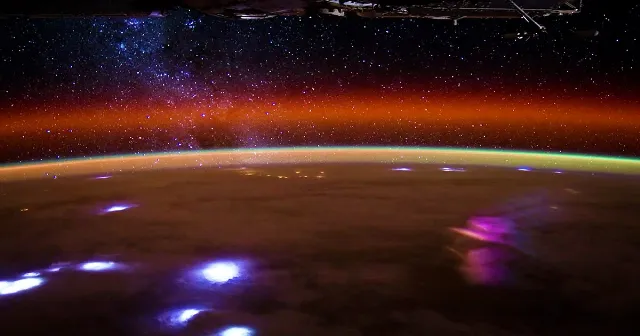
For centuries, lightning has crackled across our skies, a familiar yet mysterious spectacle. While we know it involves a buildup of electrical charge in storm clouds, the precise trigger for those brilliant discharges has remained elusive. Now, armed with a new generation of instruments, physicists are closing in on an answer—and discovering that storm clouds are far more violent and exotic than anyone imagined.
The Gamma-Ray Surprise
Recent observations have revealed that thunderclouds are not just electric generators; they are also sources of high-energy gamma rays. These flashes, known as terrestrial gamma-ray flashes (TGFs), were first detected by satellites in the 1990s, but new ground-based and airborne detectors are capturing them in unprecedented detail. The leading theory is that these gamma rays result from chains of high-energy electron avalanches—a process where electrons accelerate in the cloud's intense electric field, colliding with air molecules and releasing more electrons in a runaway cascade.
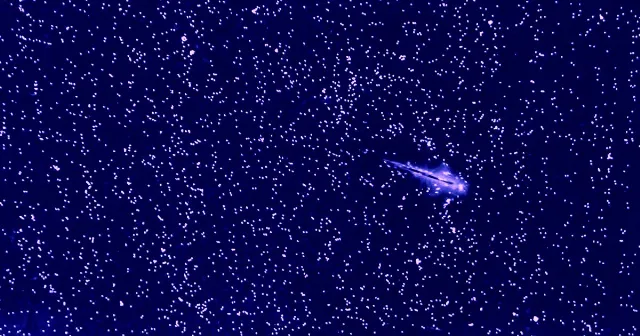
This phenomenon, called relativistic runaway electron avalanches (RREAs), may be the key to understanding lightning initiation. The electrons' collisions produce gamma rays, and these gamma rays can ionize the air, creating conductive paths that could trigger a lightning strike. But the story doesn't end there.
Flickering Flashes and Unexpected Phenomena
Scientists have also observed that these gamma-ray emissions flicker and pulse in complex patterns, sometimes lasting just milliseconds. This suggests that the electron avalanches are not steady but occur in rapid bursts, possibly linked to the chaotic movements of charged particles within the storm. Some researchers propose that these bursts could be the long-sought spark that ignites lightning, though others caution that correlation does not prove causation.
To test these ideas, teams are deploying arrays of detectors on aircraft and high-altitude balloons, flying directly into storm clouds. Early results show that gamma-ray activity is more common than expected, happening even in relatively weak storms. This hints that the process may be a fundamental part of storm dynamics, not just a rare extreme event.
Implications for Forecasting and Safety
If electron avalanches indeed trigger lightning, it could revolutionize our understanding of storm electrification. Current lightning prediction models rely on bulk charge separation, but the new findings suggest that microscopic high-energy processes play a crucial role. This could lead to better forecasting of lightning strikes, which kill thousands worldwide each year and disrupt aviation and power grids.
Interestingly, the research also connects to other fields. For example, the physics of electron avalanches shares similarities with processes in nuclear fusion reactors, and the detection techniques borrow from particle physics. Understanding these storms might even shed light on extreme phenomena in other planetary atmospheres, like the lightning on Jupiter or Venus.
As instruments improve, scientists expect more surprises. The quest to explain lightning has already revealed that storm clouds are seething with gamma rays and high-energy particles—a hidden world of violence and beauty. The answer to what causes lightning may turn out to be stranger and more fascinating than we ever guessed.