In a world where mathematical proofs can span hundreds of pages, the advent of automated proof-checkers like Lean has sparked a quiet revolution. Terry Tao, one of the most celebrated mathematicians of our time, has become an unexpected evangelist for this technology. He sees it not as a threat to human creativity but as a tool that could expand the boundaries of what mathematics can achieve.
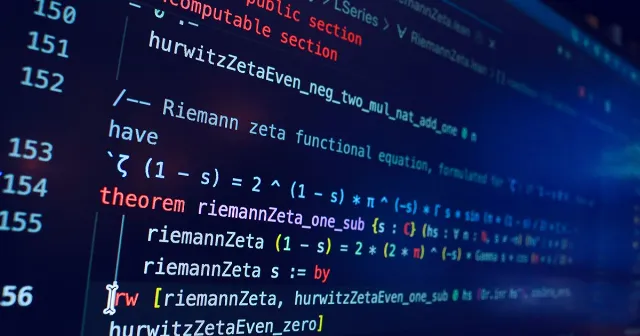
The Lean program, developed by Microsoft Research, has already verified more than a quarter of a million theorems. It works by breaking down complex proofs into small, manageable chunks, solving each bit, and then reassembling them with absolute confidence in their correctness. For Tao, this is a game-changer. It allows mathematicians to tackle problems that were previously too unwieldy to verify by hand, opening up new avenues of inquiry.

But does this change what mathematics is? Critics worry that relying on machines might strip the discipline of its human essence. Yet Tao argues that Lean complements rather than replaces mathematical intuition. By handling tedious verification, it frees mathematicians to focus on the creative aspects—conjecturing, connecting ideas, and exploring the unknown. This echoes discussions in other fields, such as the digital proof revolution, where computer verification enriches rather than constrains discovery.
Lean's impact extends beyond verification. It has led to new insights, as the process of formalizing a proof often reveals hidden assumptions or alternative pathways. For example, the Gödel's Incompleteness Theorems remind us that mathematics can never be fully captured by any system, yet Lean's success suggests that practical verification can still push boundaries. Tao envisions a future where AI not only checks proofs but also suggests new theorems, acting as a collaborative partner in research.
The implications for mathematical education are profound. Students could learn by interacting with proof assistants, gaining instant feedback on their reasoning. This could democratize access to rigorous mathematical thinking, much like how ultrafinitism's insights challenge our assumptions about infinity. Tao's advocacy is already inspiring a new generation to embrace these tools.
Yet challenges remain. Lean requires significant effort to encode proofs, and not all mathematicians are eager to learn its syntax. Moreover, the trust in machine-checked proofs raises philosophical questions: Can we rely on a system that might have bugs? Tao acknowledges these concerns but points to Lean's track record and the growing community of users who contribute to its library of verified mathematics.
Ultimately, Tao's vision is one of symbiosis. He believes that AI can amplify human reasoning, much like telescopes enhanced astronomy. The goal is not to replace mathematicians but to empower them. As Lean and similar tools evolve, they may redefine the very nature of mathematical discovery—not as a solitary pursuit of certainty, but as a collaborative dance between human intuition and machine precision.